

The Short Answer
Colorado’s largest statewide down payment assistance (DPA) program comes from the Colorado Housing and Finance Authority (CHFA). It offers a grant of up to 3% of your first mortgage (max $25,000) that never has to be repaid, or a 0% deferred second mortgage of up to 4% (max $25,000) that’s repaid when you sell, refinance or pay off the home. Along the Front Range, metroDPA offers a 0% deferred second mortgage with no first-time buyer requirement and an income limit of $210,150. Most programs require a credit score of 620 or higher, a homebuyer education class and a small contribution of your own money.
But DPA isn’t free money. It usually comes with a higher rate and higher fees than a standard loan. Here’s what it really costs: see Jenn’s Insider Take below.
Colorado Down Payment Assistance Programs Compared
| Program | Assistance | Repayment | First-time buyer required? | Minimum credit | Income limit | Area |
| CHFA DPA Grant | Up to 3% of first mortgage, max $25,000 | None, it’s a grant | Not required by CHFA | 620 mid-score | Varies by household size, county and program | Statewide |
| CHFA DPA Second Mortgage | Up to 4% of first mortgage, max $25,000* | 0% interest; due at sale, refinance, payoff or if it stops being your primary residence | Not required by CHFA | 620 mid-score | Varies by household size, county and program | Statewide |
| metroDPA | A percentage of the first mortgage, based on loan type (e.g., 5% on FHA) | 0%, 30-year deferred second; no monthly payments; due if you sell, refinance or move out | No | 620 (640 in some cases) | $210,150 | Front Range |
| Prop 123 DPA (Colorado DOLA) | Up to 20% of the home’s cost | Non-forgivable loan; terms set by the local government or nonprofit running it | Varies | Varies | Up to 120% of area median income | Participating local governments |
| Colorado Housing Assistance Corporation (CHAC) | Up to $12,000, varies by program | Several options, from deferred to low-interest repayment | Varies | Varies | Varies | Statewide |
| Colorado Roots DPA Fund | Up to 10% of purchase price, max $50,000 | 30-year loan at 1–2% interest | Varies | Varies | 50–120% of area median income | Select Colorado areas |
| Boulder County DPA | Up to 8.5% of purchase price, max $15,000 | 2% for 30 years (61–80% AMI); 0% deferred (below 60% AMI) | Varies | Varies | Below 80% AMI | Boulder County, outside Boulder city limits |
| City of Boulder H2O Loan | Up to $100,000 | No payments for 30 years unless the home is sold or title transfers | Varies | Varies | Program-specific | Market-rate homes in Boulder city limits |
* CHFA’s FirstGeneration and HomeAccess programs (for first-generation buyers and buyers with permanent disabilities) allow the full $25,000 regardless of first mortgage amount. Figures are current as of the date above; programs change, so confirm current terms before applying.
What Is Down Payment Assistance?
Down payment assistance is money from a housing agency, city, county or nonprofit that reduces the cash you need at closing. Depending on the program, it can cover your down payment, closing costs and prepaids. It usually comes in one of three forms:
- Grant: you never repay it.
- Deferred second mortgage: no monthly payment; repaid when you sell, refinance or pay off the home.
- Low-interest second mortgage: repaid monthly, usually at a below-market rate.
CHFA Down Payment Assistance: How It Works
CHFA assistance is paired with a CHFA first mortgage (FHA, VA, USDA or conventional) and is available only through CHFA’s network of participating lenders. For the grant or the second mortgage, you’ll need:
- A 620 minimum mid-credit score (exceptions may apply if you have no credit score)
- A $1,000 minimum financial investment of your own, in addition to any other required closing costs or down payment. Gift funds may count.
- A CHFA-approved homebuyer education class, completed before closing (free in-person classes and online options are available)
- The home to be your primary residence
- Household income and purchase price within CHFA limits for your county and program
Grant funds can be used for down payment, closing costs and prepaids. They can’t be used to pay off your debts or fund a repair escrow.
CHFA Grant vs. CHFA Second Mortgage: Which Is Better?
On a $400,000 first mortgage, the grant provides up to $12,000 and the second mortgage up to $16,000. The trade-off:
- Choose the grant if you might sell or refinance within a few years. There’s nothing to pay back.
- Choose the second mortgage if you need the extra 1% and plan to stay put. Remember the full balance comes due when you sell or refinance.
CHFA notes that higher interest rates apply when you use its DPA options. Before deciding, compare the total cost of each option against a loan with no assistance. You can check today’s rates or run the numbers with our mortgage calculators.
What Is a Good DTI for a Mortgage?
metroDPA, sponsored by the City and County of Denver and participating Front Range communities, offers a 0% interest, 30-year deferred second mortgage with no scheduled payments. There’s no first-time homebuyer requirement, so repeat buyers are eligible. The income limit is $210,150, with added benefits for conventional-loan borrowers below 80% of area median income. Homebuyer education is required, and the minimum credit score is 620 (640 in some cases).
Prop 123: Colorado’s Newer State-Funded Assistance
Voters approved Proposition 123 in 2022, and part of that funding goes to down payment assistance through the Colorado Department of Local Affairs (DOLA). You don’t apply to the state directly. The money flows through participating local governments and nonprofits, which lend to buyers earning up to 120% of area median income. Loans can be as large as 20% of the home’s cost, but they’re non-forgivable, and the home carries a 5-year affordability period. Availability depends on whether your city or county is participating, so ask before you count on it.
How Much Income Can You Make and Still Qualify?
No single income limit applies statewide. Limits depend on:
- Household size
- County
- Whether the property is in a targeted area (limits may be higher)
- The loan program and type of assistance
metroDPA’s $210,150 cap is one of the higher limits in the state. If you’re over one program’s limit, you may still qualify for another.
Can You Combine Down Payment Assistance Programs?
Sometimes, but not freely. CHFA assistance requires a CHFA first mortgage and metroDPA requires its own first mortgage, so buyers usually choose one or the other. Some local and nonprofit programs can be layered on top, but every source of funds has its own rules and has to be approved together. Ask your loan officer to confirm this before you make an offer.
Common Mistakes That Delay DPA Closings
- Waiting to take the homebuyer class. Take it as soon as you start looking. A missing certificate can hold up closing.
- Not documenting your own funds. Keep your $1,000 contribution in a bank account with a clear paper trail.
- Assuming “income” means your pay stub. Program income limits can be calculated differently than the income a lender uses to qualify you.
- Shopping above the purchase price limit. Know your program’s limit for the county before you tour homes.
What to Do Before You Apply
- Check your credit score. Most programs need 620 or higher.
- List your monthly debts.
- Confirm how much cash you have, including any gift funds.
- Gather two years of income and employment history.
- Narrow down the counties where you want to buy.
- Sign up for a homebuyer education class.
Get pre-approved with a lender who works with Colorado DPA programs. New to the process? Start with our home buying guide.
Frequently Asked Questions
How much down payment assistance can I get in Colorado?
Through CHFA, up to 3% of your first mortgage as a grant or up to 4% as a deferred second mortgage, capped at $25,000. Some local programs offer more, including Colorado Roots (up to $50,000) and Boulder’s H2O loan (up to $100,000) in their service areas.
Do I have to be a first-time homebuyer to get down payment assistance in Colorado?
Not always. metroDPA has no first-time buyer requirement, and CHFA’s DPA options don’t list one either. Some local programs do require it, and each program defines “first-time buyer” in its own way.
Does Colorado down payment assistance have to be repaid?
It depends on the program. The CHFA grant never has to be repaid. The CHFA second mortgage and metroDPA are 0% deferred loans with no monthly payment, repaid when you sell, refinance or stop living in the home.
What credit score do I need for CHFA down payment assistance?
A 620 minimum mid-credit score for all borrowers, with possible exceptions for borrowers who have no credit score.
Can I use down payment assistance with an FHA, VA, USDA or conventional loan?
Yes. CHFA and metroDPA both work with FHA, VA, USDA and conventional first mortgages, subject to each program’s guidelines.
Do I have to take a homebuyer education class?
Yes, for both CHFA and metroDPA. CHFA requires an approved class before closing, and free in-person and online options are available.
Jenn’s Insider Take: What Nobody Tells You About DPA
Okay, here’s where I take the lender hat off and talk to you like I’d talk to my own sister.
Everyone sells down payment assistance like it’s a free lunch. Let me tell you something: nobody gets a free lunch, especially in mortgages. That money comes from somewhere, and usually it’s you, just on the back end.
Here’s what to watch for:
- Ask about the fees. Then ask again. DPA loans typically carry higher fees than a “regular” mortgage. They’re marketed with “as little as $1,000 down” or even “$0 down,” but most buyers still bring thousands to closing. And that money isn’t going into your equity. It’s going to fees.
- You’re probably paying above par. Par is the rate a lender can give you on any given day without charging you extra or giving you a credit. DPA loans are often priced above that, and it’s usually not spelled out until you’re already under contract. Ask what your rate would be without the assistance so you can see the difference.
- Watch who’s running your loan. A lot of seasoned loan officers shy away from these loans. So you may end up with a rookie who’ll take any deal they can get. Ask how many DPA loans they closed last year.
- Read the fine print on how long you’re stuck. Don’t plan on buying with a grant and refinancing out of the higher rate six months later. These programs expect you to stay in the loan for a set amount of time so the lender can recoup that “assistance.” Depending on the program, refinancing early can also mean paying the assistance back in full.
Is DPA ever worth it? Absolutely. For some buyers it’s the difference between owning this year and renting for three more. Just go in knowing what it actually costs. Have your loan officer show you two Loan Estimates side by side, one with DPA and one without. Then decide.
Talk to a Colorado Loan Officer About Your Options
You don’t have to wait until you’ve saved 20% to buy in Colorado. Blue Arrow Lending can review your income, credit and target area, tell you which assistance programs you’re likely eligible for, and compare the real cost of each one against a loan with no assistance.
[CONFIRM BEFORE PUBLISHING — keep only if accurate:] Blue Arrow Lending works with CHFA and metroDPA down payment assistance programs.
Start with a quick payment estimate or contact Blue Arrow Lending to talk through your options.
About the Author
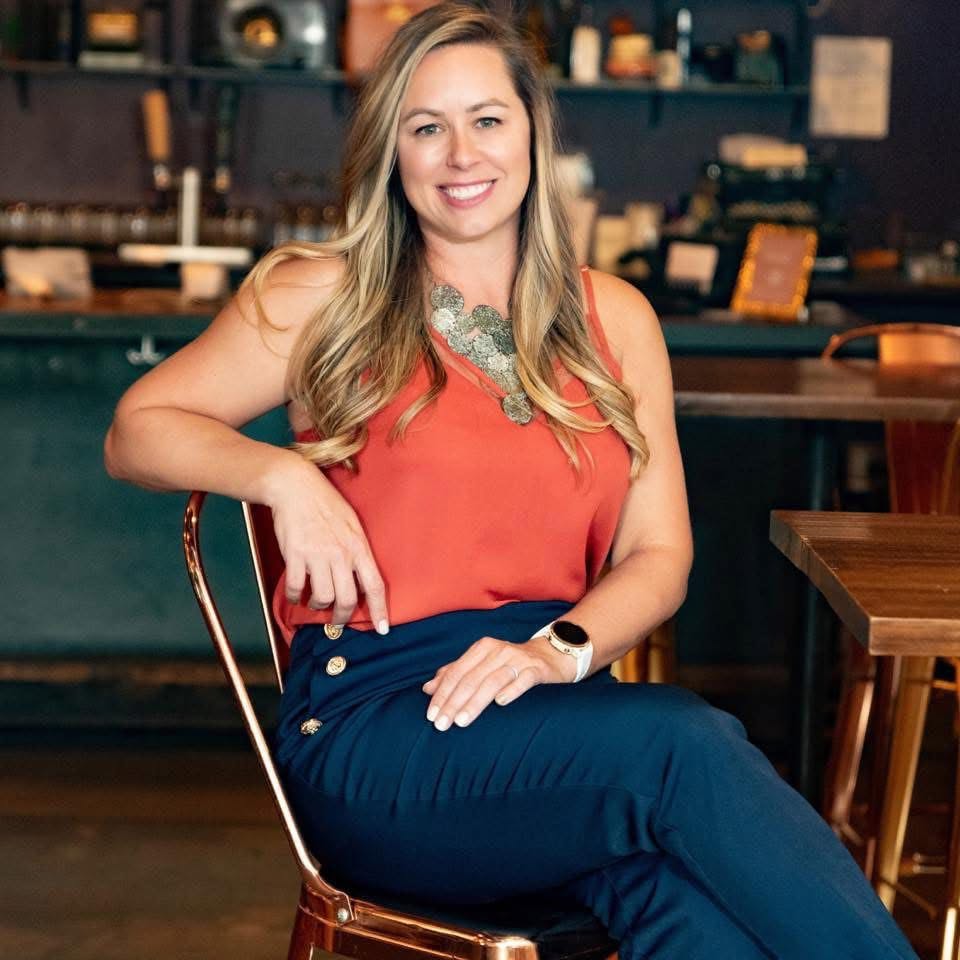
Jenn Moretti is the President and Senior Loan Officer of Blue Arrow Lending, a mortgage brokerage based in Arvada, Colorado. She’s licensed in Colorado, Florida, Kansas, Texas and Wyoming, and she still answers her own phone. Jenn built Blue Arrow on a simple rule: integrity first. That means telling buyers the whole story, including the parts that don’t help close the deal. When she isn’t working with borrowers, she serves on the Board of Directors of the Police Foundation. Verify Jenn’s license on NMLS Consumer Access (NMLS# 573143).
Sources
Program availability, income limits, purchase price limits, loan terms and eligibility requirements change and are set by each program sponsor. This article is for general information and is not a commitment to lend. All loans are subject to credit approval. Blue Arrow Lending, NMLS# 2046633. Jenn Moretti, NMLS# 573143. Equal Housing Opportunity.